
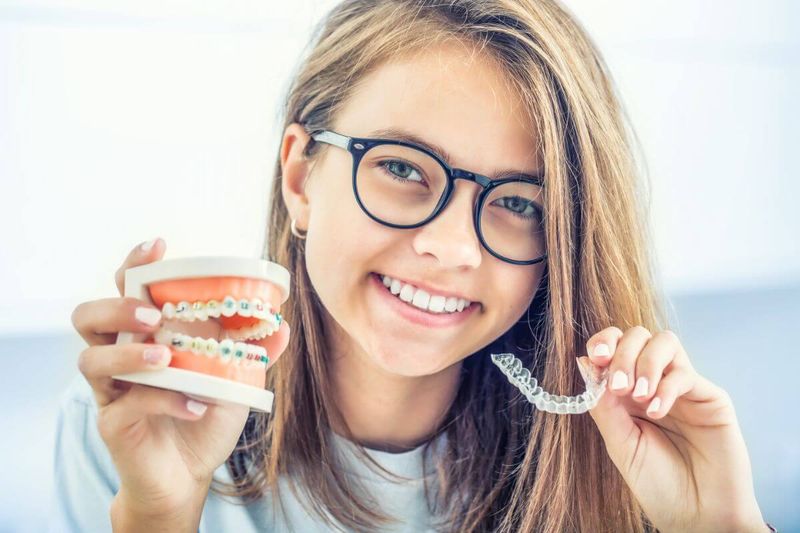
When comparing Invisalign for teens vs. braces, parents want clear answers about what each treatment actually involves. Both options can achieve a smile transformation, but they work differently and suit different lifestyles. At Rawle Orthodontics in Lake Mary, Dr. Christopher Rawle helps families understand exactly what each treatment looks like in practice so you can make the best choice for your teen.
What Are the Two Main Orthodontic Options for Teens?
The two main orthodontic options for teens are Invisalign (clear, removable aligners) and traditional braces (fixed brackets and archwires). Both move teeth into proper alignment, but they differ in appearance, daily maintenance, and the level of responsibility required from your teen. At Rawle Orthodontics in Lake Mary, families can explore both paths during a free consult with Dr. Rawle.
Invisalign
Invisalign uses a series of custom-made, removable plastic trays (called aligners) that fit snugly over teeth. Each set applies gentle pressure to shift teeth gradually, and they swap to a new set every one to two weeks. Because the trays are clear, most people won’t even notice treatment is happening. The catch? They need to be worn 20 to 22 hours per day for treatment to stay on track. That means they come out only for eating, drinking anything besides water, and brushing.
Traditional Braces
Traditional braces take a fixed approach. Metal or ceramic brackets are bonded directly to each tooth, and an archwire threads through them to apply continuous pressure. There’s nothing to remember to put in or take out. The braces do their work around the clock, and Dr. Rawle makes adjustments at regular visits to keep things moving in the right direction.
Both options have come a long way in recent years. Today’s clear aligners can treat a wider range of cases than earlier versions, and modern braces are smaller, more comfortable, and less noticeable than what you might remember from your own teenage years.
The “right” choice depends less on which technology is superior and more on which one fits daily life, personality, and specific orthodontic needs. Understanding how each one works is the best place to start.
How Does Each Treatment Work? A Step-by-Step Look
Invisalign uses a series of removable clear aligners changed every one to two weeks, while braces use fixed brackets and archwires adjusted every six to eight weeks. Both gradually shift teeth into alignment over 12 to 24 months, though the day-to-day experience differs significantly.
Both Invisalign and braces begin the same way: a free consult where Dr. Rawle, a board-certified orthodontist, examines teeth, takes digital scans using the iTero scanner, and creates a customized treatment plan. From there, the paths split.
Invisalign Teen
Invisalign Teen means receiving a series of custom 3D-printed clear aligners. Each set is worn for one to two weeks before switching to the next, and the aligners gradually shift teeth into their ideal positions. They come out for eating, drinking anything other than water, and brushing. Check-up visits happen roughly every eight to ten weeks to monitor progress.
Traditional Braces
Traditional braces look different from day one. At the first visit, brackets are bonded directly to each tooth, and an archwire connects them to apply gentle, continuous pressure. Dr. Rawle adjusts the wire at regular visits to keep teeth moving into place. Brushing and flossing happen around the fixed brackets daily, and adjustments typically occur every six to eight weeks.
The key difference? Invisalign requires wearing aligners 20 to 22 hours daily for treatment to work effectively. Braces work around the clock since they stay fixed in place. Neither approach is inherently better or worse. They simply require different levels of responsibility.
Key Benefits of Invisalign and Braces for Teens
Invisalign offers teens a nearly invisible, removable option with easier hygiene, while braces provide worry-free compliance and handle complex cases with precision. Understanding these distinct advantages can help you match the right option to your teen’s personality and lifestyle.
What Are the Benefits of Invisalign Teen?
- Most people won’t notice treatment is happening, which matters a lot to image-conscious teens
- No food restrictions. Remove the trays and eat whatever sounds good
- Brushing and flossing happen normally without brackets in the way, supporting better oral hygiene throughout treatment
- Fewer emergency visits since there are no broken brackets or poking wires
- Smooth plastic fits comfortably against cheeks and lips
- Built-in compliance indicators. Small blue dots on each tray fade with wear, so parents can see whether the aligners are actually being used
What Are the Benefits of Traditional Braces?
- Zero compliance worries. Treatment progresses whether your teen remembers or not
- Ideal for complex cases, including severe crowding, rotations, and bite issues that need precise control
- Nothing to lose (literally). Fixed brackets can’t be misplaced or left behind at a restaurant
- Colorful elastic bands let teens pick new colors at every visit and express their personality
- Decades of proven effectiveness across all types of cases, delivering predictable results time after time
For image-conscious teens involved in theater, debate, or who simply prefer discretion, Invisalign often appeals more. Teens who might struggle with the responsibility of removable aligners, or who love the idea of picking new band colors each visit, often thrive with braces.
Invisalign vs. Braces for Teens: Side-by-Side Comparison for Lake Mary Families
When parents ask Dr. Rawle which option is better, there’s no single winner. The best option depends on how your teen lives day to day. Here’s how the two compare across the factors that matter most.
| Factor | Invisalign Teen | Traditional Braces |
|---|---|---|
| Appearance | Nearly invisible clear plastic | Noticeable, though ceramic options are subtler |
| Comfort | Smooth aligners; mild pressure when switching trays | May cause soreness after adjustments; wires can poke |
| Eating | Remove aligners; eat anything | Avoid hard, sticky, and crunchy foods |
| Oral Hygiene | Remove to brush and floss normally | Requires careful cleaning around brackets |
| Office Visits | Every 8-10 weeks on average | Every 6-8 weeks for adjustments |
| Teen Responsibility | High: must wear 20-22 hours daily | Low: treatment works automatically |
| Sports & Activities | Remove for contact sports; easy for musicians | Mouthguard recommended; may affect some instruments |
| Treatment Time | Typically 12-24 months | Typically 12-24 months |
The American Association of Orthodontists (AAO) recommends an initial orthodontic evaluation by age 7, and both Invisalign and braces are recognized as effective treatments for most common orthodontic issues in teens. The right choice often comes down to lifestyle fit rather than clinical superiority.
What Affects the Cost of Invisalign and Braces for Teens?
Invisalign and braces for teens are often priced similarly for comparable cases. Cost is a practical concern for every family, and the total depends on a few things.
For families in Lake Mary, the total investment is shaped by these factors:
- Case complexity: More severe crowding or bite issues may require longer treatment
- Treatment duration: Longer treatment typically means higher overall cost
- Appliance type: Ceramic braces cost more than metal, and Invisalign pricing varies by case
- Geographic location: Costs can vary by region, though Lake Mary families benefit from competitive pricing at Rawle Orthodontics
- Insurance coverage: Most dental plans with orthodontic benefits cover both options equally
Many families are surprised to learn that Invisalign doesn’t necessarily cost more than braces. Rawle Orthodontics offers low monthly payment options to make either treatment accessible. Our payment calculator on the website helps you estimate costs before your first visit.
The most accurate way to understand your investment? Schedule a free consult. Dr. Rawle will examine your teen, discuss treatment options, and provide a clear breakdown of costs including what your insurance may cover.
Is Your Teen a Better Candidate for Invisalign or Braces?
Teens with mild to moderate orthodontic issues and strong self-discipline are typically good Invisalign candidates. Those with complex bite problems, severe crowding, or concerns about keeping up with removable aligners often do better with traditional braces. Dr. Rawle, a board-certified orthodontist, evaluates each case individually during a free consult at Rawle Orthodontics.
Invisalign Teen may be the better fit if your teen:
- Has mild to moderate crowding, spacing, or bite issues
- Is responsible and motivated to wear aligners consistently
- Participates in contact sports where a removable option adds safety
- Feels self-conscious about the appearance of metal braces
- Has good oral hygiene habits and will clean aligners properly
Traditional braces may be the better fit if your teen:
- Has severe malocclusion, complex rotations, or significant bite problems
- Might forget to wear aligners or lose them frequently
- Prefers a “set it and forget it” approach to treatment
- Enjoys the idea of customizing their look with colored bands
- Has certain dental situations that respond better to fixed appliances
During your free consult at Rawle Orthodontics, Dr. Rawle evaluates digital X-rays, iTero scans, and overall dental development. He’ll give you an honest recommendation based on what will deliver the best results, not just what’s popular.
Here’s what Dr. Rawle sees regularly in Lake Mary consultations: the deciding factor usually isn’t age. It’s how a teen handles responsibility in other areas of life. A teen who keeps track of their retainer, phone, and homework without constant reminders will likely do well with Invisalign. A teen who loses water bottles weekly and needs nudges to brush? Braces take the guesswork out of the equation. You know your kid best, and that insight helps shape the decision.
Frequently Asked Questions About Teen Orthodontic Treatment
Can my teen play sports with Invisalign or braces?
Yes, teens can play sports with either option. With Invisalign, simply remove the aligners and wear a regular mouthguard during practice and games. With braces, an orthodontic mouthguard fits comfortably over the brackets. Many student athletes in Lake Mary have successful treatment with both options.
What happens if my teen loses an Invisalign tray?
Contact Rawle Orthodontics right away. Dr. Rawle may recommend wearing the previous tray, moving to the next one early, or ordering a replacement. Invisalign Teen includes replacement aligners for this exact reason.
How often are office visits needed during treatment?
For Invisalign, visits typically occur every eight to ten weeks. For braces, adjustments happen every six to eight weeks. Both schedules work well with busy school calendars, and our team does everything possible to minimize missed class time.
At what age should my teen start orthodontic treatment?
Most teens begin treatment between ages 11 and 15, after enough permanent teeth have come in. The AAO recommends an initial orthodontic evaluation by age 7 to catch any developing issues early. Dr. Rawle can advise on the ideal timing for your child during a free consult.
Will insurance cover Invisalign the same as braces?
In most cases, yes. Dental plans with orthodontic benefits typically cover both Invisalign and braces up to the same lifetime maximum. Our team verifies your insurance benefits before treatment begins so you know exactly what to expect.
Will treatment affect my teen’s speech?
A slight lisp during the first few days with new aligners or after getting braces is normal. This typically resolves within a week as the tongue adjusts. Most teens adapt quickly and speak normally throughout treatment, and it rarely affects school presentations or daily conversations.
If you’re weighing the options, the team at Rawle Orthodontics in Lake Mary can help you figure out the right fit. Dr. Rawle genuinely enjoys working with teens and families, and our practice is built around making orthodontic treatment actually enjoyable. Your smile is our priority, and we want every family to feel confident in their decision. Curious which option will work best for your teen? A free consult is the easiest way to get specific answers for your family. Sit back, relax & get started.